
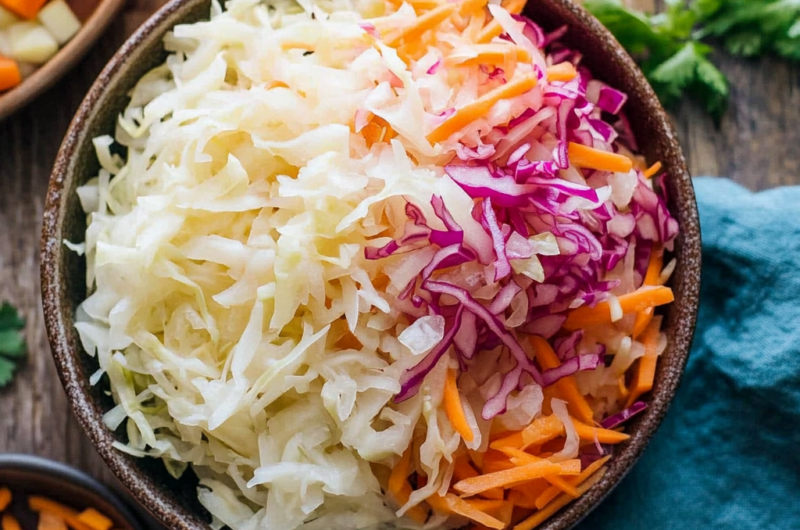
Discover the ultimate Homemade Sauerkraut Recipe packed with probiotics and rich, tangy flavors. This easy-to-make Russian sauerkraut (Kvashenaya Kapusta) is perfect as a side dish, salad base, or sandwich topping. Made with fresh cabbage, carrots, and simple ingredients, this fermented classic is a must-try for gut health and delicious versatility. Whether you’re new to fermentation or a seasoned pro, this sauerkraut recipe delivers perfect results every time.

Ingredients for Homemade Sauerkraut:
- 2 medium/large cabbages (about 5 1/2 lbs or 2.5 kg)
- 2-3 medium carrots, grated
- 2 Tbsp fine sea salt
- 1 Tbsp sugar
Two Ways to Serve as a Salad:
Mom’s Classic Sauerkraut Salad:
- 1/2 small purple onion, finely diced
- 2 Tbsp sunflower oil (preferred for more flavor) or olive oil
Sauerkraut Apple Salad:
- 1/2 small purple onion, finely diced
- 1/2 apple (any kind, such as Gala), diced
- 1/2 tsp sugar
- 2 Tbsp white grapes or dried cranberries
- 1-2 Tbsp extra light olive oil (not extra virgin)
Instructions
How to Make Russian Sauerkraut:
- Prepare the Cabbage: Remove the outermost leaves from the cabbages. Cut each cabbage into quarters and finely shred using a mandolin or sharp knife. Discard the cores.
- Combine Ingredients: In a large mixing bowl, combine shredded cabbage, grated carrots, sea salt, and sugar. Scrunch and knead the mixture vigorously for 4-5 minutes until the cabbage begins to release its juices. The cabbage should produce enough juice to cover it when tightly packed, but it shouldn’t be overly wet.
- Pack the Jar: Fill a large glass jar with the cabbage mixture, pressing it down firmly so the juices cover the cabbage completely. Leave the jar only two-thirds full to allow space for fermentation expansion.
- Create a Weight: Place a clean plate or the lid from a sour cream container over the cabbage and weigh it down with a jar of water, a sanitized rock, or another heavy object. Loosely place the lid on the jar (do not tighten).
- Fermentation Process: Let the jar sit at room temperature for 4 days. Keep it over a dish or in the sink to catch any overflow. Each day, poke a few holes into the cabbage with the back of a wooden spoon to release gas and press the cabbage down to keep it submerged.
- Refrigerate: After 4 days, the cabbage will stop fermenting and rising. Transfer the sauerkraut to the refrigerator, where it will keep for several weeks when stored cold.
Tips
- Juice Coverage: Ensure the cabbage is fully submerged in its juices during fermentation to prevent spoilage.
- Fermentation Temperature: Room temperature (65–75°F) is ideal for fermentation. Avoid temperatures that are too cold or too warm.
- Cleaning Tools: Use sanitized utensils and jars to avoid contamination during fermentation.
Variations and Substitutions
- Additional Flavors: Add garlic cloves, dill, or caraway seeds for a unique twist.
- Salt Substitute: Use kosher salt if sea salt is unavailable, but avoid iodized table salt, which can interfere with fermentation.
- Vegan Option: Replace sunflower oil with olive or avocado oil in the salad variations.
FAQs
Q: How long does sauerkraut last in the fridge?
A: Homemade sauerkraut can last up to 2–3 months if kept cold and properly sealed.
Q: Can I use red cabbage instead?
A: Yes, red cabbage can be used for a colorful and equally delicious alternative.
Q: What if my sauerkraut smells unusual?
A: A tangy smell is normal. However, if you detect a foul odor or see mold, discard the batch.
Serving Suggestions
- Enjoy as a side dish with roasted meats, sausages, or fish.
- Serve as a topping for sandwiches, burgers, or hot dogs.
- Add to salads, soups, or stir-fries for an extra tangy kick.
Why You’ll Love This Recipe
- Healthy Probiotic Boost: Packed with gut-friendly probiotics that aid digestion.
- Simple Ingredients: Made with just cabbage, carrots, salt, and sugar—no preservatives.
- Versatile: Serve it on its own, in salads, or as a flavorful topping.
- Customizable: Easily adapt flavors with your favorite herbs and spices.
Enjoy this traditional Russian sauerkraut recipe for its bold flavor, health benefits, and ease of preparation!
Homemade Sauerkraut Recipe (Kvashenaya Kapusta)
8
servings30
minutesIngredients
-
for Homemade Sauerkraut:
-
2 medium/large cabbages (about 5 1/2 lbs or 2.5 kg)
-
2-3 medium carrots, grated
-
2 Tbsp fine sea salt
-
1 Tbsp sugar
-
Two Ways to Serve as a Salad:
-
Mom’s Classic Sauerkraut Salad:
-
1/2 small purple onion, finely diced
-
2 Tbsp sunflower oil (preferred for more flavor) or olive oil
-
Sauerkraut Apple Salad:
-
1/2 small purple onion, finely diced
-
1/2 apple (any kind, such as Gala), diced
-
1/2 tsp sugar
-
2 Tbsp white grapes or dried cranberries
-
1-2 Tbsp extra light olive oil (not extra virgin)
Directions
- How to Make Russian Sauerkraut:
- Prepare the Cabbage: Remove the outermost leaves from the cabbages. Cut each cabbage into quarters and finely shred using a mandolin or sharp knife. Discard the cores.
- Combine Ingredients: In a large mixing bowl, combine shredded cabbage, grated carrots, sea salt, and sugar. Scrunch and knead the mixture vigorously for 4-5 minutes until the cabbage begins to release its juices. The cabbage should produce enough juice to cover it when tightly packed, but it shouldn’t be overly wet.
- Pack the Jar: Fill a large glass jar with the cabbage mixture, pressing it down firmly so the juices cover the cabbage completely. Leave the jar only two-thirds full to allow space for fermentation expansion.
- Create a Weight: Place a clean plate or the lid from a sour cream container over the cabbage and weigh it down with a jar of water, a sanitized rock, or another heavy object. Loosely place the lid on the jar (do not tighten).
- Fermentation Process: Let the jar sit at room temperature for 4 days. Keep it over a dish or in the sink to catch any overflow. Each day, poke a few holes into the cabbage with the back of a wooden spoon to release gas and press the cabbage down to keep it submerged.
- Refrigerate: After 4 days, the cabbage will stop fermenting and rising. Transfer the sauerkraut to the refrigerator, where it will keep for several weeks when stored cold.
Leave a Reply